

Winter Cycling in Ice and Snow update: This page was refreshed on May 22, 2026 with a faster decision section, practical fit or safety checks, and clearer internal links for the next step.
Winter Cycling in Ice and Snow: Control Comes First
Riding in ice and snow is less about toughness and more about control. Slow down, avoid sudden steering, brake earlier, choose routes with room to react, and match tires and clothing to the surface before you leave.
| Condition | Main risk | Safer response |
|---|---|---|
| Black ice | Sudden loss of traction | Stay upright, brake gently, and avoid sharp turns. |
| Fresh snow | Hidden ruts and obstacles | Use lower speed and scan farther ahead. |
| Slush | Wet feet, grime, and unstable lines | Use fenders, lights, and extra drivetrain care. |
| Deep cold | Cold injuries and mechanical issues | Shorten the route and carry backup warmth. |
Is cycling on ice safe?
Cycling on ice is never risk-free. It becomes safer when you reduce speed, use suitable tires, keep the bike upright, and avoid routes where a fall would put you in traffic or far from help.
Use the wind chill chart and winter tire guide before icy rides.
Why do we ride in the winter? I’m frequently asked as I walk into a pub or movie theater, “Aren’t you cold?”. I just smile warmly and say “Nope”. Nearly every day coworkers used to ask if I had taken my bike, thinking “It’s worse weather than yesterday, there’s no way he rode his bike” and every day they would be amazed.
I was approached by a co-worker today and asked WHY I did it. I couldn’t answer him. I didn’t know. All I could say was “It’s a welcome challenge” but that just barely scratches the surface of the WHY question. So that started me thinking. Why? Why do I put up with -30C temperatures and -40C wind chill? Why do I put up with the lack of good traction?
I ended up riding 11 km that day in that stuff, and I was completely exhausted, but I wouldn’t have missed it for the world. The little voice inside my head kept screaming “YES! This is so much fun!”. I was riding through stuff that was too hard to walk through. I even got off for a spot and walked, but immediately jumped back on the bike because it was easier than pushing the bike!
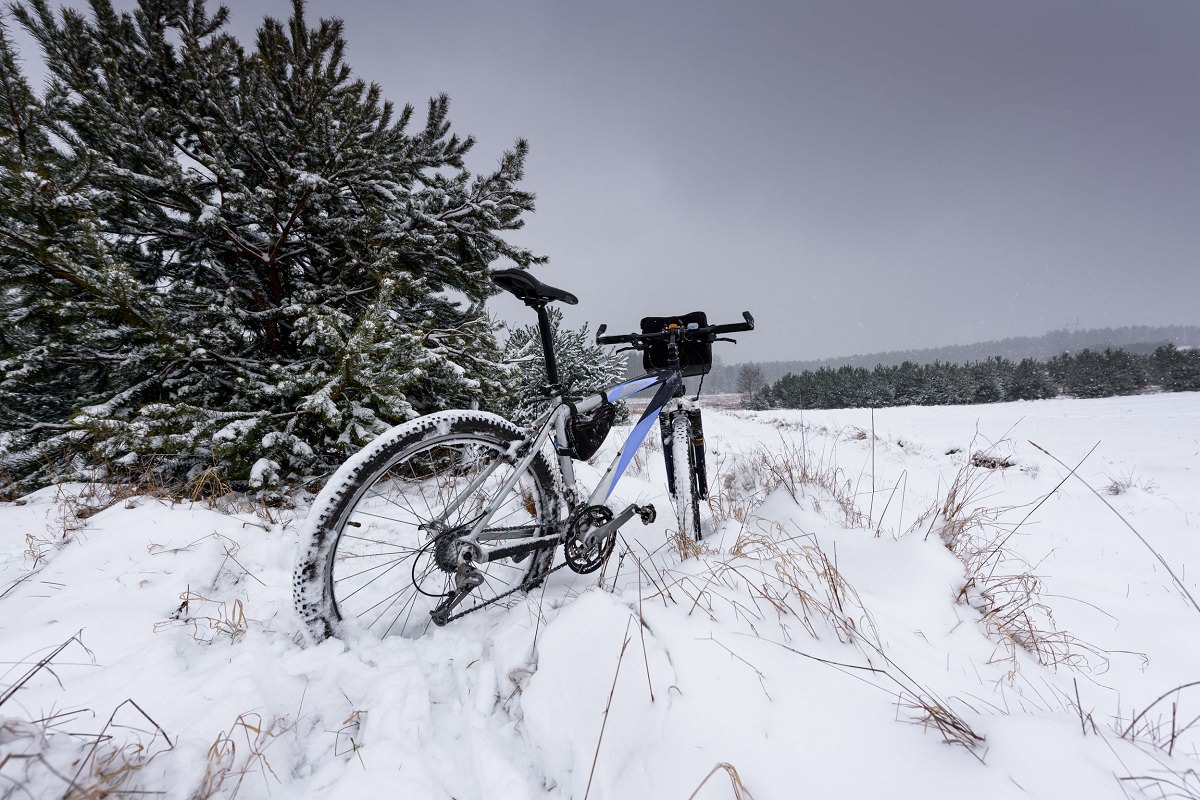
From what I’ve seen, the traffic is better in the winter than in good weather. Everyone pulls together. Everyone realizes no one can stop fast. Even on the bad days, when I arrive at my destination intact and possibly exhausted, I accomplish something. I did something most people are scared of. I rode in weather that people have frozen to death in, beat the traffic, got home safe, and got healthier because of it.
I love riding bikes, for all reasons, including reasons that have nothing to do with biking. Every time I’m driving a car, I hate how visibility is reduced by all that steel surrounding you. I feel far safer on my bike because if I don’t see a car coming, there is no car coming.
Learn how to cycle safely and comfortably in winter with our expert tips
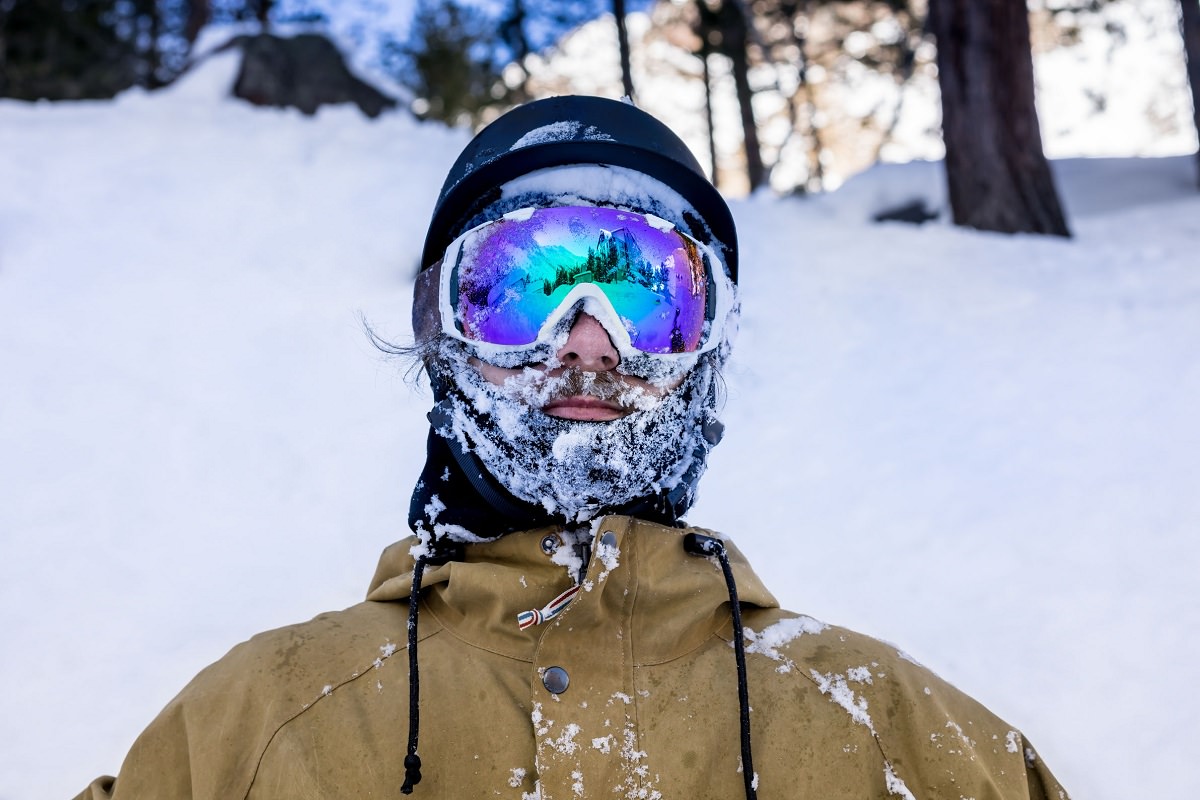
How To Start Winter Cycling
The easiest way is just don’t stop. You cycle all summer, right? Just keep it up. See how late in the year you can be out cycling, whether for commuting or recreation. There is no inherent reason to hang up the bike at a certain date.
1. Find Reliable Equipement
Don’t think of it as attempting to ride all winter. Just think of it as riding today. Possibly tomorrow, conceivably next week, but today. You probably will not ride throughout your first winter. Most ice bikers wimp out during the harsh weather in the first year. This is because it seems daunting, and also it takes a year or more to figure out the clothing issues, find reliable equipment, and get it down to a science.
2. Go For Warmer Gear Or Studded Tires
If it sucks for much longer than the first mile, you may have an equipment problem. You may need warmer gear, or maybe you are having trouble handling the bike on the slippery surface and studded tires would be nice about now. It might be that you are expecting summertime speeds into the teeth of winter gales. That too is an equipment problem.
Find the best winter cycling gear for your needs with our comprehensive guide.
3. Work On Your Attitude
You need to invest in a different attitude. One that says you will get there just as reliably if only a tad later by going slower. Nothing is more uncomfortable than working up a drenching sweat when bundled up for winter conditions.
Discover the joys of winter cycling in Ottawa with our comprehensive guide
4. Wear That Helmet
Finally, if you are going to fall, you are going to fall in the winter. So until you are sure of yourself, when going on the roadway in winter or on lake ice, wear a helmet even if you have a “thing” against helmets. Don’t worry about crashing in the deep snow. It’s fun! But remember there are often rocks under the snow.
5. Pay Attention
Notice when a particular clothing combination is too hot or too cold and make a mental note of the temperature and wind conditions. If you are the methodical type record these and stick them in your computer database or something. After a while, you just KNOW that when it’s just below freezing and expected to warm up.
Explore the fascinating history of ice biking and winter cycling with our in-depth article
6. Don’t Delay Getting What You Need
Buy those boots, get those winter tights, and purchase the light set, yes you feel silly in a balaclava but it sure is warm. Improvise or Invest. Each tank of gas costs $25 or more, so you can afford those items. You deserve them.
7. Be Careful On Ice
Watch it on ice till you get the hang of it. Slow turns, no sudden braking or swerving. Again Pay Attention!. Notice that what looks slippery may not be, but that patch of shade up ahead may have a wicked patch of black ice in it.
Read about the most inspiring winter cycling stories from around the world.
8. Ride On Traction
Ride where the traction is. The bare-looking center of the roadway may have an invisible glaze of ice on it, while the side of the road with an inch of undisturbed snow will supply far better traction. Test the traction with your rear brake, short squeezes only, just till the tire breaks traction.
My favorite advice: Have a nice big cup of coffee before you start.
9. Know Where To Park Your Bike
Depending on where you work you may or may not have adequate bike parking. Most cyclists would like to bring their bikes indoors while at work. This is not always desirable or allowed because of the vast amounts of road grit (paid for by taxpayers – distributed by sanding trucks) that your bike picks up in winter.
Then depending on the crime element in your vicinity, you might have to strip the bike of valuable items and lock it to something really solid. Far better if you can negotiate somewhere to park a filthy bike, such as under a stairwell or in a utility room.
An Alternative View: Bringing a snowy cold icebike into a warm area just lets it rust faster.
10. You Will Need Lights for the Urban Commute
Unless you want to carry your charger, you need batteries that will last at least the duration of “there and back”. It is nice to be able to go for a couple of days before recharging. It’s hard to buy too much battery capacity.
Second, you need a tail light of some sort. The little LED blinkie thingies seem to be all the rage today. Do yourself a favor. Park your bike with blinkies blinking and walk back one block in the sort of environment you will be riding. If after this test you are still confident of these lights go ahead and use them. Better yet, use two of them. See our lights page.
When it starts snowing and those big flakes or blowing I like to add a strobe light that you can purchase in outdoor activity stores, or see here.
These create a ball of light as they flash against the falling snow. They do get attention. Attach them to your traffic sidearm, not your bike.
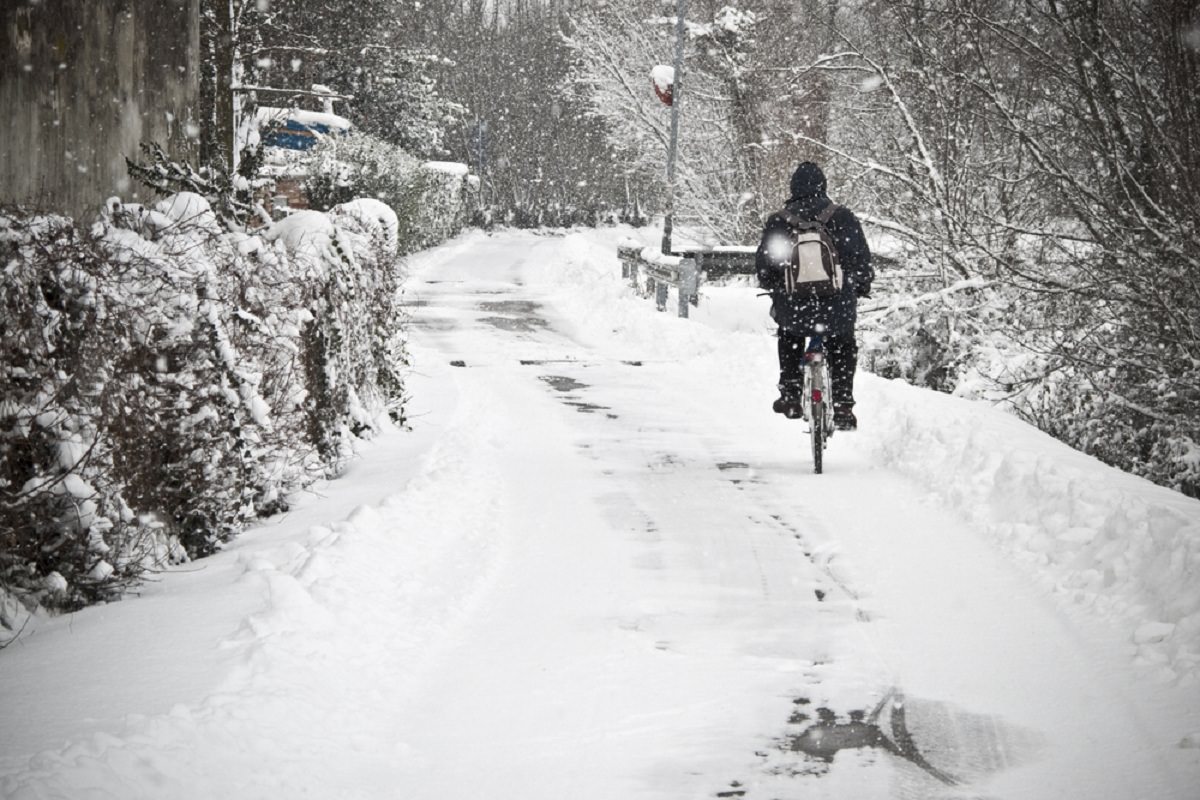
Tips For Managing The Cold While Winter Cycling
More than once I’ve arrived dripping with sweat only to be asked “Aren’t you freezing out there”? This question is usually asked by someone who drove to work in a toasty single-occupant vehicle, which was parked in a garage all night, but they got bundled up in a down jacket for that 30-foot walk from the car to the office.
The answer is: Not very often. You are more likely to get too warm. Biking produces a lot of heat. If you do get cold, ride faster, it makes more heat.
Problem areas: hands and feet. Unlike when walking, your hands and feet are locked in the same position while biking. You can wiggle your toes and fingers if you feel them getting cold, but this, at best, will simply delay the need to get to someplace warm. If you have a long way to go, stop for some coffee, and sit by the radiator. Your hands are hard to re-warm if they get cold, so go for extra warm gloves and it should not be too much of a problem.
Check out our winter clothing pages for various recommendations. Shoes are another matter. Finding something warm enough that will still fit in the toe clips can be difficult. Check the shoe page.
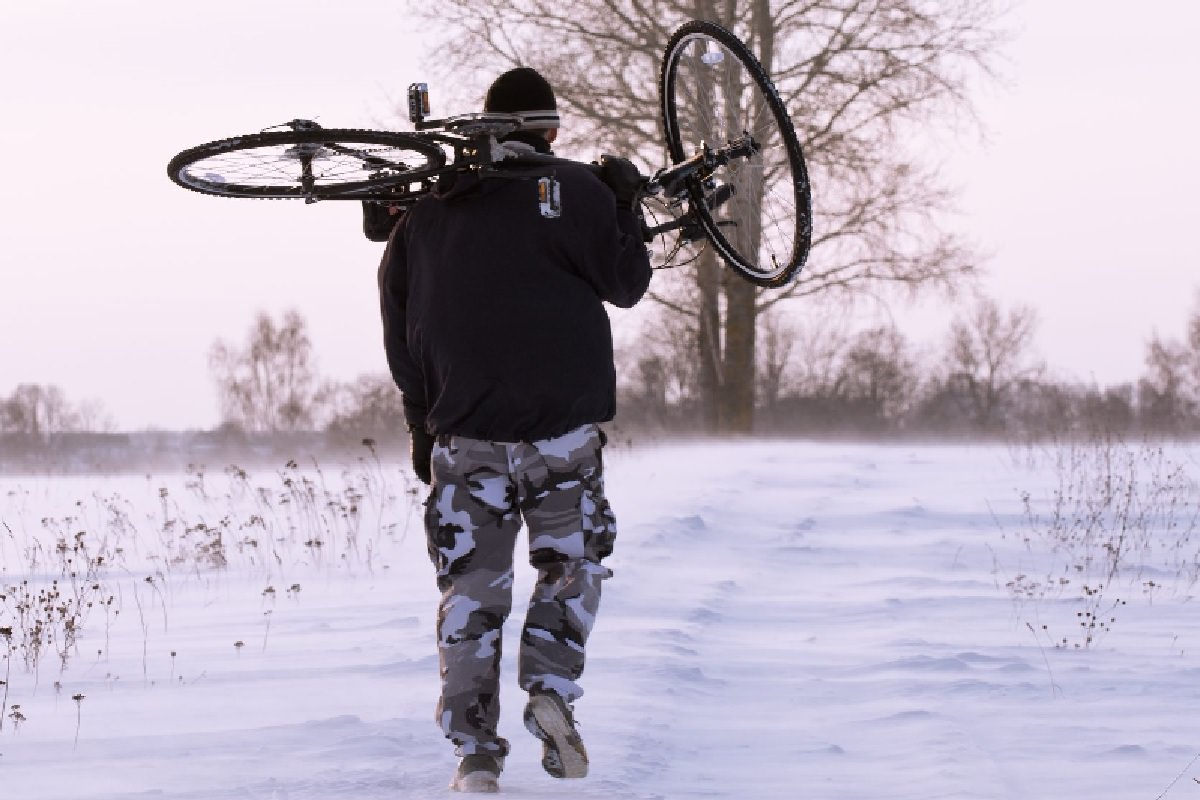
Winter Cycling Equipment Checklist
Winter commuters need specialized equipment that you might not need on your typical run “up the trail” or over the river in recreational ice biking.
| Category | Items/Considerations |
|---|---|
| Transportation | – Panniers, backpacks, or fannypacks for work clothes, lunch, papers, and computers. |
| Visibility | – Big lights with long run-time batteries for early morning or late evening commutes. – Consider high-powered lights for ungodly hours spent on the road. |
| Security | – Lock that exceeds the total weight savings of the lightest bike and the most brutal diet. |
| Weather Protection | – Fenders for protection against wet and muddy conditions. |
| On-Road Repair Kit | – Carry a kit with tools, patches, and essentials for quick repairs. |
| Emergency Fund | – Bus fare stashed in a bike bag for unexpected situations. Having it seems to ward off having to use it. |
| Clothing | – Mix-and-match collection for protection in various temperatures without compromising mobility. – Difficulty in finding winter cycling tights; regular pants may make pedaling harder. |
| Footwear | – Search for winter cycling shoes that are warm, not “ventilated,” waterproof, and light. Consider light hiking boots. |
| Safety Accessories | – Bicycle mirror for better visibility when bundled up. Helmet or eye-glass-mounted mirrors are practical. |
Tactics and Tips For Winter Commuting
Icebiking on the roadway in winter can be more hazardous than summer biking, but there are some good points too.
1. How To Deal With Road Hazards
If you road-bike a lot, you may have noticed that where there are bike lanes motorists will feel free to pass you 6 inches off your elbow, but where there are no bike lanes (on a road of similar width) they will give you 3 feet of clearance. This is the bike lane-induced squeeze factor. Those motorists are somehow convinced that the 6-micron-high strip of point somehow protects cyclists.
In the winter the bike lanes often are obscured. When this happens you will notice that the motorists act like there are no bike lanes and start sharing the road properly. Watch it around stop signs. Airheaded motorists are usually quite surprised to find that the darned thing doesn’t want to stop all that well and they will come sliding right through. Generally watch intersections very carefully in winter.
2. How To Deal With Slushy Snow
At or around freezing weird things can happen. The slushy snow can melt almost as fast as it hits the ground, but can still collect on your chain and get carried into your rear gear cluster and freeze there.
The best you can do in this situation (other than stopping and cleaning it every half mile) is to get in the big chain ring and a fairly big cog in the back, thereby putting the chain under as much tension as possible. Then stay in this gear pedaling with great force on every third or fifth stroke.
This puts the ice building up on the cogs under tremendous pressure, which lowers the melting point, which keeps that gear (and only that one) free of ice till you can limp along to the end of your journey.
3. How To Deal With Freezing Temperatures
Beginning 5 to 10 degrees below freezing, you have to start watching the wind chill. Above that you are giving off enough heat to not have to worry about it much. This is when you want to consider a balaclava or face mask.
Don’t forget to fill in the neck opening at the top of your jacket. By this time you better have already gotten out of those race-oriented cycle shoes and into a winter boot or lightweight hiking boot or your toes will start to freeze in under 30 minutes.
From about +20F to about –20F is perfect ice biking weather. Never any slush, and not much deep new snow to deal with, the only bad part is the wind. After –20F, you have to start wearing a lot of movement-inhibiting clothes. However, I never notice much difference from -20F down to -40, because by the time it is that cold you are usually dressed for it, and you can compensate for the temperature by working a little harder.
4. How To Deal With On-Road Repairs In Winters
If you have a breakdown or a flat at these temperatures, you can be in trouble. Hypothermia can set in since you are already sweaty from working and if you have to sit for any length of time you will chill quickly.
Luckily, flats are rare at these temps, because the snow plows seem to remove most of the broken bottles and nails, etc. that you find in summer. This is where it pays to carry a spare tube because you don’t want to fiddle with finicky patches when it is that cold.
Weird valve problems can happen if you ride through water at really cold temps. There has been more than one report on the ice bike mailing list and rec.bicycles.tech newsgroup about Schrader valves opening (perhaps due to expansion of freezing water in the top of the valve stem), and the tire going flat almost instantly, but upon inspection, no visible damage to either tire or valve. Simply re-inflate and it works fine. Avoid the puddles.
Keep your bike in top condition this winter with our winter bike maintenance guide.
How Often Should You Ride On Ice?
So you have convinced yourself that you want to try winter commuting by ice bike, but would like to know what you are up against?
Just how often will you be riding in winter conditions, with snow and ice to contend with in addition to the usual problems of cycle-commuters? Until you are out there every day, or you go digging through a mountain of statistics, you may have nothing but horror stories to go on when planning your winter commute. Luckily, some ice bikers are the driven type who keep bike logs. One such cyclist is Bob VonMoss who bike commutes year round in Chicago. Bob kept logs of his winter of 98/99 icebike commutes to get a handle on just how often he was icebiking.
I colored in the days on a calendar and wrote the lowest temperature during the ride, based on weather service temps on their web page.
“An icebiking day is defined here as a day when the temp is at or below 32F/0C.”
The low temps are not the weather service low temps for the day, just the low temp *during* the ride to or from work.
Also, days off or holidays aren’t counted, nor are Saturdays.”
Bob VonMoss
Here’s what Bob’s logs show:
| 1998/9 | Icebikes | Avg. commute low temps (F) |
|---|---|---|
| Nov | 1 | 28 |
| Dec | 9 | 14.7 |
| Jan | 15 | 15.5 |
| Feb | 10 | 28.6 |
| Mar | 6 | 29.2 |
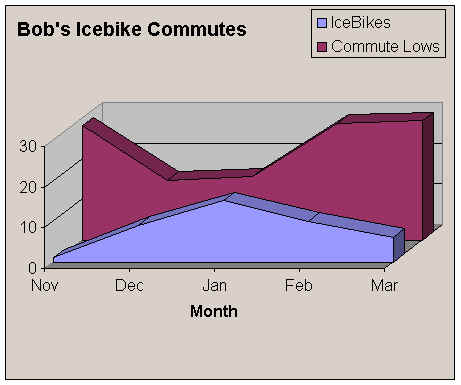 If you plot the number number of commutes and the average commute temperatures you can see that most icebike commutes occurred in January, even though December’s rides averaged slightly colder. The coldest ride was minus 12, in January.
The average low temp on the commute days was 20.8 F for the entire winter. (Remember, this sample only includes true icebike days. Days above freezing were not included).
In Mid-continental North America, if you bike to commute about 22 days a month, you can expect to ride in below-freezing weather about half of the time in the dead of winter.
You can plan on temperatures 15 degrees (F) below freezing as an average. If you planned to “wimp out”, January would be the month to do it, but even January is not that bad. While it’s not often really miserably cold at these latitudes, there are still plenty of ice days. Knowing that half your rides for three months are likely to be icy can help you justify that set of studded tires or winter tights.
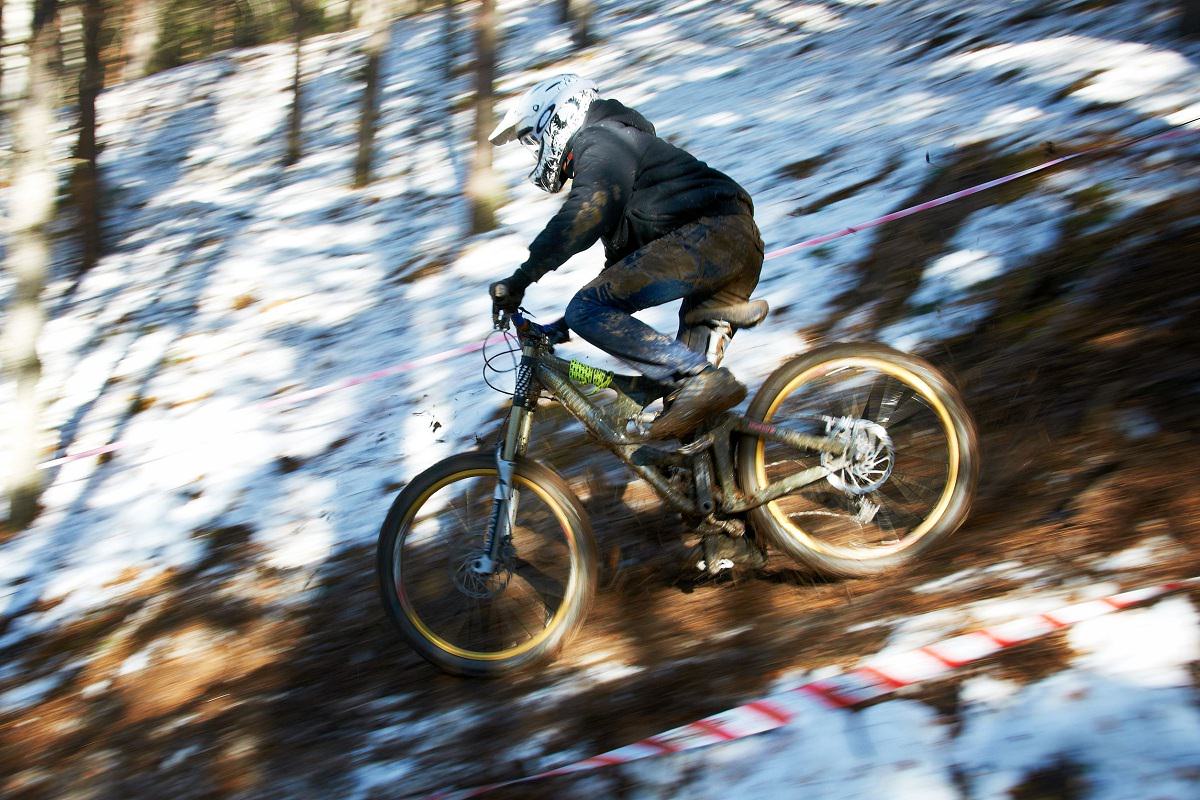
Is Icebiking Risky?
How risky is icebiking? Are you taking your life in your hands when you venture on the icy road? While it can’t be said that icebikers are never injured, it would seem that as a means of transportation or recreation winter cycling is no more risky than cycling in general. It may be safer.
How Safe is Cycling In Winters?
Most people, especially new cyclists and motorists believe that cycling is one of the most dangerous modes of transportation. This is not necessarily true. Several sources of information indicate that cycling is safer than traveling by motor vehicle. See the table below and a more detailed explanation of Ken Kifer’s How Dangerous is Cycling page.
The table shows the risk per hour of exposure to various activities. Note that bicycling has about half the risk per hour of exposure that passenger cars impose. These figures are for all cyclists. Experienced cyclists have a far lower fatality rate than pictured here.
| Activity | Fatalities per million hrs |
|---|---|
| Skydiving | 128.71 |
| General Aviation | 15.58 |
| On-road Motorcycling | 8.80 |
| Scuba Diving | 1.98 |
| Living (all causes of death) | 1.53 |
| Swimming | 1.07 |
| Snowmobiling | .88 |
| Passenger cars | .47 |
| Water skiing | .28 |
| Bicycling | .26 |
| Flying (scheduled domestic airlines) | .15 |
| Hunting | .08 |
| Cosmic Radiation from transcontinental flights | .035 |
| Home Living (active) | .027 |
| Traveling in a School Bus | .022 |
| Passenger Car Post-collision fire | .017 |
| Home Living, active & passive (sleeping) | .014 |
| Residential Fire | .003 |
Compiled by Failure Analysis Associates, Inc. (Appeared in Design News, 10-4-93)
Bikes are not used for routine commuting for distances much beyond 30 miles. Time is the limiting factor as to what vehicle is chosen for most commutes. Therefore time is the logical unit of comparison, not distance.
Considering that the average passenger car travels at 17 mph over the life of the vehicle, you can assume that at least as many hours are spent in the car as on the bike. Therefore, although you may go faster and farther in a car, you will spend about the same amount of time doing it. Your risk for the period you spend in a car is twice as high as the same period you spend on a bike.
How safe is winter cycling
Winter cyclists report a few serious accidents. There are the occasional crashes but because of extra clothing and a slippery surface to land on, these usually result in less injury than would be sustained by a bare-limbed cyclist on dry pavement. Road rash is just about unheard of.
In the winter of 98/99, the icebike site conducted a survey of winter cyclists with an automated web-based survey instrument. One of the questions asked concerned the worst accident that respondents had experienced while cycling in winter. The results were surprising. These results are replicated below and on the full result page.
Only slightly over 4 percent had ever required medical attention for a winter cycling accident. Fully 70% had never been injured at all!
Question 11: What Was Your Worst Winter Cycling Accident?
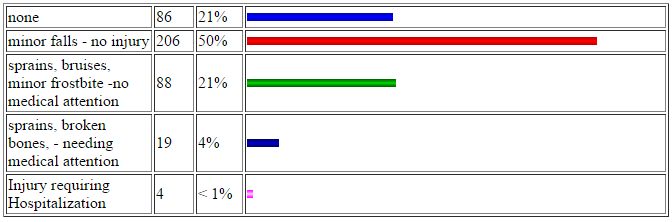
Yet this is not to say that winter cycling is uneventful. Another 70% did have some uncontrolled collisions with the ground or other injuries, but nothing requiring medical attention. Perhaps because of this, icebikers tend to be realists and realize they may well fall and are prepared for it. Fully 82% of the respondents ALWAYS wear a helmet. (see the full results page).
Now we are fully aware that web-based surveys are somewhat suspect in that there is very little control over who fills out the survey and how many times they do it. Nevertheless, this is the best data we know of regarding winter cycling, and inspection of the raw data did not show obvious signs of intentional tampering.
How Slippery Is It?
Lots of winter cyclists end up with a death grip on the handlebar worrying about every little steering movement. After a while you get used to the amount of slip-and-slide movement that the bike exhibits, and learn to “dance with the bike”, controlling those small slips and learning to avoid the big ones. Then you get overconfident, and crash.
So how slippery is it? What kind of conditions do ice bikers have to especially watch? The Society of Accident Reconstructionists (SOAR) puts out a publication called “The Source”.
In the “Winter 1998” issue they published a study done by John E. Hunter who conducted an extensive study of the frictional values of car tires involved in collisions on snow/ice-covered roads. The Friction Values (coefficient of friction) were taken at the road tire interface and represent values available to a normally treaded tire representing the equivalent of “good equipment.”
We’ve excerpted the key findings below. The classifications and descriptions are Mr. Hunter’s.
| Classification | Description | Friction Available |
|---|---|---|
| Dry Asphalt | This value is commonly used as the reference value for rubber tires on dry asphalt. Concrete is typically lower. |
0.68 to 0.85 Average value of 0.72 |
| Partial Frost | Light or partial coating of frost on the road surface. Visible to the driver as intermittent frosting appearance. Partial Frost had a resistance level similar to the lower range of wet asphalt. |
Average value of 0.63 |
| Frost | General white coating covering entire lane. Visible to the driver and completely recognizable as frost. |
Frost was .10 less than Partial Frost. Average value of 0.53. |
| Heavy Frost | Almost ice conditions. Heavy white coating and very visible to the driver Heavy Frost had a value close to the higher ranges of ice. |
Average of a 0.39. |
| Tracked Snow | Snow compacted by vehicles. | The test results varied in range. Average was a 0.35 |
| Untracked Snow | Snow not compacted by prior vehicles. | The individual readings were similar to Tracked Snow. Average of 0.35 |
| Snow & Ice | Generally known by motorists as compact snow and ice, or “hard pack”. | Snow and Ice was nearly identical to the frictional resistance found for Black Ice, 0.25 to a high of 0.41 Average of 0.32 |
| Black Ice | Icy layer generally covering asphalt, difficult to see by the average driver. Often found on overpasses and elevated structures. |
The ranges for Black Ice varied from a low of 0.25 to a high of 0.41 Average of 0.32 |
| Sunny Ice | Ice that has been exposed to the heating rays of the sun. A water layer was not generally observed. |
Sunny Ice yielded low readings, Average of 0.24. |
| Wet Ice | Ice covered with a layer of water. Generally seen when the temperatures reach 32 to 33 degrees, or near the melting point. |
Wet Ice, similar to sunny ice, Average of 0.24. |
| Glare Ice | Ice that was the smoothest surface observed. Similar to wet ice except the water layer was not observed. looks like glass. |
The lowest value measured was Glare Ice. Average of 0.19. |
Which Bikes Can You Ride On Ice?
For lots of folks, the question of which bike to ride in the winter is moot. You ride the one you have. You may have no room, no money, or no desire for another bike. What you have must serve for winter and summer and every place and every time in between.
But if you had your “Druthers”….(and in truth, you probably do, because a second bike need not be all that expensive) what type of bike should you use for winter cycling?
I rather suspect that 95% of all winter cyclists are riding mountain bikes. Another 4% are riding touring or “cross” bikes, and the last 1% are riding everything else from crit bikes to recumbents. This is sheer speculation, for other than what I see on the road or the lakes I have no data.
| Bike Type | Advantages | Considerations |
|---|---|---|
| Mountain Bikes | – Wide tires provide traction on ice and hardpacked snow. – Ability to reduce tire pressure for better grip. – Equipped for fenders and rear-racks. |
– Tire choice and pressure can be confusing. – Limited speed on roads. |
| Touring Bikes | – Narrower tires for faster commuting. – Equipped for fenders and racks. |
– Narrow tires might affect braking on ice. |
| Road Bikes | – Fast and efficient on clear roads. – Studded tires can improve traction on icy roads. |
– Skinny tires may struggle with ice and gravel. – Limited tire width options. |
| Recumbent bikes | – Some short wheelbase (SWB) recumbents can perform well on ice. | – Long wheelbase (LWB) recumbents may be tricky on icy roads. – Generally not suitable for off-road situations. |
FAQs
Is it OK to bike with a cold?
It’s okay to bike with symptoms above the neck If you have symptoms below the neck, it is best to avoid cycling.
Is it good to cycle in winter?
Yes, it is good to cycle in winter.
Is it safe to ride a bike in snow?
Yes, if you have the experience and skills, it is safe to ride in snow. However, it is best to take care
Do bikes slip on ice?
Yes, bikes do slip on ice.
Recap
Sometimes winter riding sucks. Sometimes it’s soggy and you get soaked right through, and the freewheel is frozen, and nothing shifts, and the brakes just skid on the rims, and the driver behind you is leaning on the horn, but it’s the good days that make up for it.
So, do you feel ready to ride in the winter now? Let me know in the comments below!
Excerpted Information for this article was supplied by Larry Fasnacht a member of SOAR and fellow icebiker.
Also Read:
- 15 Best Bikes For Heavy Riders
- How To Do Winter Road Bike Training With Rollers
- Cycle Computers For Winter And Ice Cycling
- Wind Chill Chart For Winter Cyclists And Ice Bikers
- This Is Why You Are Cycling Slower In The Winter


5 thoughts on “Winter Cycling in Ice and Snow: Icebike Tips for Safer Riding”
i enjoyed this post
I’m a 53 year old year round cyclist living in Ottawa. Have been on my bike for 22 years. Five years ago, I said “screw-it, I’m riding all winter!” I started as an experiment to determine what the real challenges would be. As I read through your text, I found my experience lines-up well with yours. I think one key message is this: Most of the time, most winter biking is still done on relatively clean pavement, or dry enough packed snow that it does not cause any problems. The issue is weather protection, not ability to stay on the bike.
Wipe-outs hurt way more in summer due to hard surfaces and higher speeds. Winter wipe-outs are fun, and you are usually so cold that the pain is numbed – an activity-induced anesthetic !!!
The challenges: Fresh snowfall >5 cm. Slightly narrowing street-space due to snow accumulation. Retaining good visibility in often darker commutes. In Ottawa, the Dry Slush (Drush) that others call brown sugar. That stuff is amazing for how it threatens stability, slows speed, clogs chains, and adds weight to your bike.
Tips – use old motor oil to keep your chain well lubed. I run my chain through a rag-full every week.
Suggestion for your article: A set of hot-links to each section so repeat visitors and come back and see new content.
Section you could add: Tips for drying all your crap during the day while at work so you can bike home. Creating more acceptable office culture for such behaviour. Comparison of FAT vs MTN for urban winter commuting. Are 3-wheeled recumbants for winter any better?
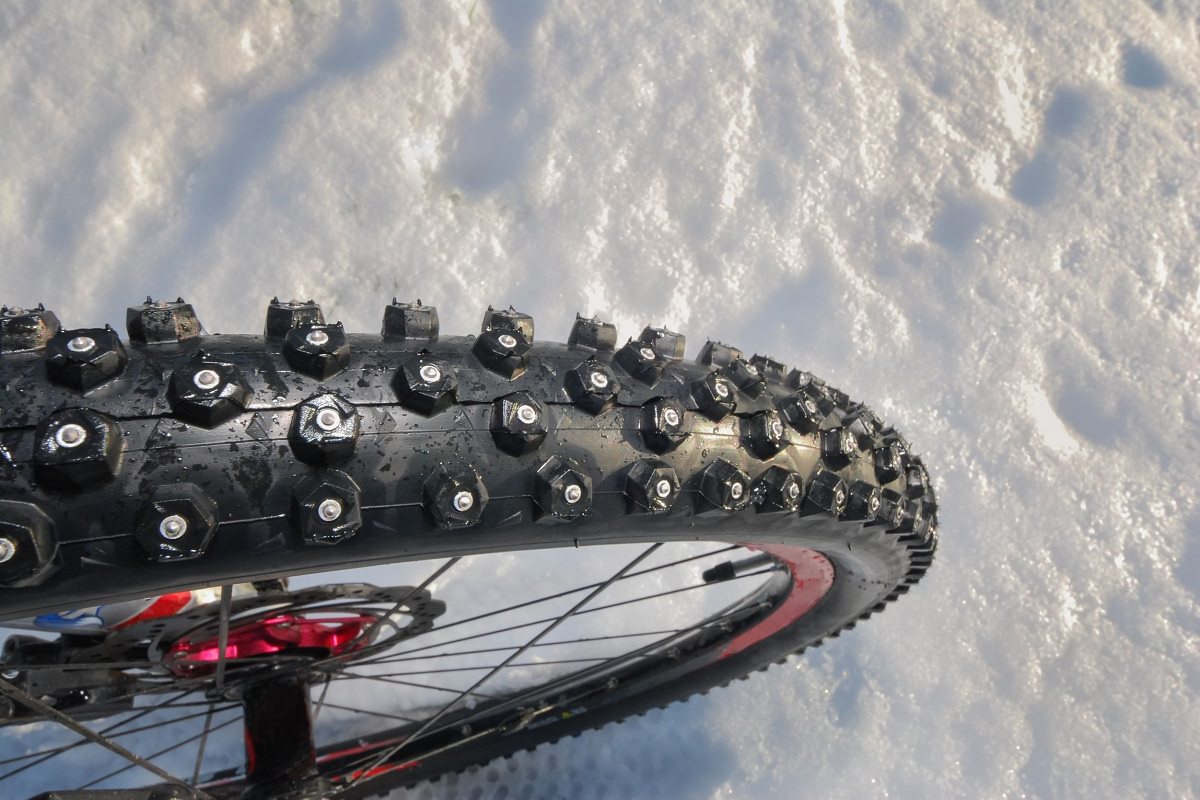
Hello, I don’t get the whole concept of drilling screws into your tires for riding on the ice. I’ve seen this recommendation before but it doesn’t make sense to me.
Won’t you pierce the tube with screws in your tires?
I can’t help but think that the screw holes will not be air tight at all. Will the screws stay in? Do you run the risk of losing air with tubed tires?
Are they special, hard-to-find screws? Or, are you saying any screw – like wood screws will do?
Thank you,
Jason
Hi admin, i must say you have very interesting articles here.
Your website can go viral. You need initial traffic only.
How to get it? Search for; Mertiso’s tips go viral
I really appreciate seeing this article! I feel like it’s every single day that I get asked, “Ya STILL riding your bike here?”
“Yes. Get over it,” I’d love to say….
Glad to see I’m validated by other folks who commute the same way as me. Keep on riding!